

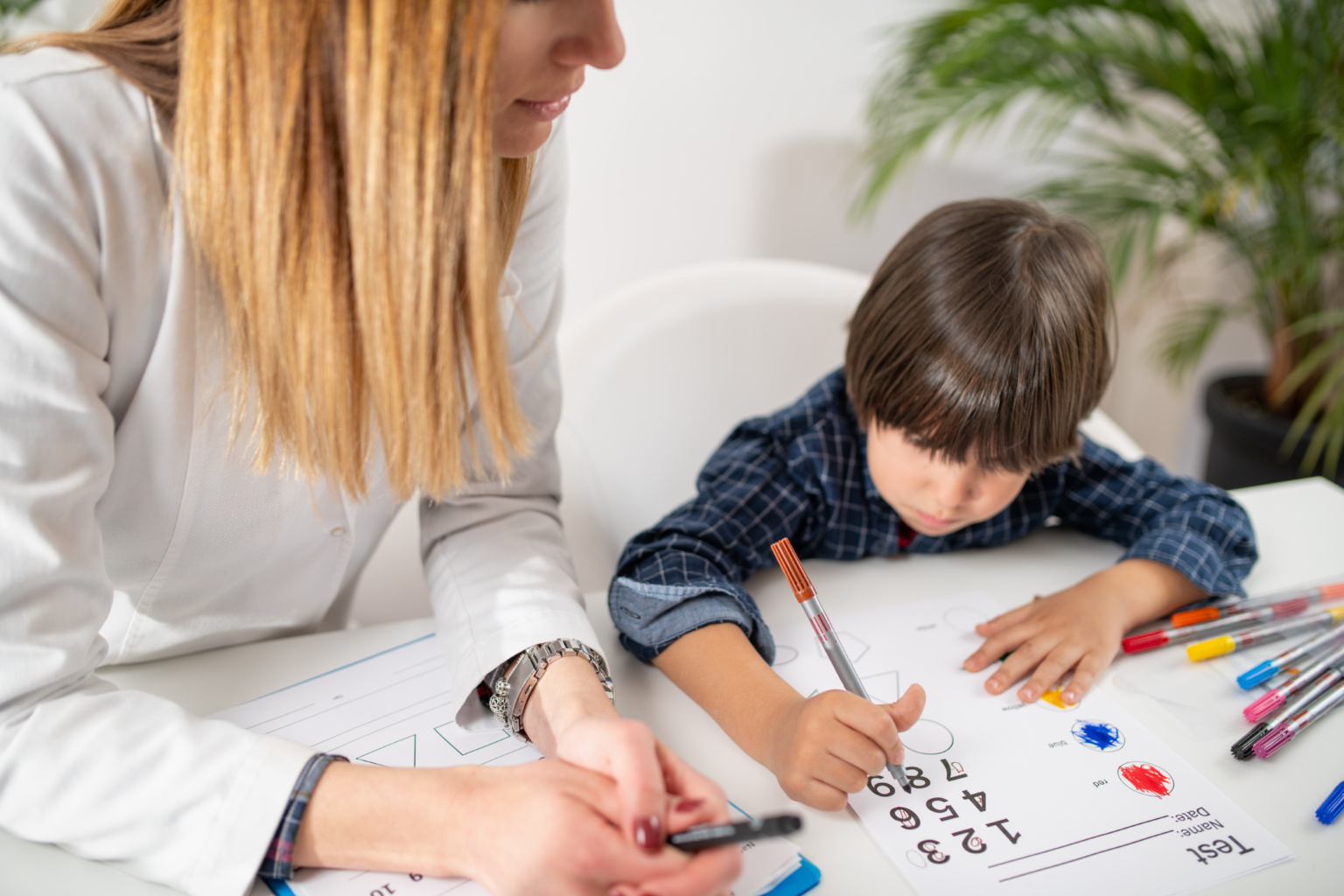
As children return to school, handwriting difficulties often become more noticeable.
Parents may hear:
- “My hand hurts”
- “I don’t like writing”
- “I’m bad at this”
Handwriting challenges can impact confidence, learning, and classroom participation — but they’re not uncommon.
What Handwriting Difficulties Can Look Like
Common concerns include:
- Poor pencil grip
- Messy or illegible writing
- Difficulty staying on lines
- Slow writing speed
- Fatigue or avoidance
These challenges are often linked to underlying fine motor, postural, or visual-motor skills.
Why Handwriting Matters
Handwriting supports:
- Written expression
- Academic assessment
- Classroom independence
When writing is effortful, children often focus on the mechanics rather than the content of their work. This can affect their ability to demonstrate what they know.
Common Causes of Handwriting Difficulties
Handwriting challenges may be related to:
- Fine motor weakness: difficulty controlling small hand movements
- Poor pencil grasp: inefficient or tiring grip patterns
- Postural instability: difficulty sitting upright and maintaining position
- Visual-motor integration: trouble coordinating what the eyes see with hand movements
- Motor planning: difficulty sequencing letter formations
Understanding the underlying cause helps target support effectively.
When to Seek Occupational Therapy Support
It may be helpful to seek occupational therapy input if your child:
- Avoids writing tasks
- Struggles to keep up with peers
- Experiences pain or fatigue
- Has difficulty with other fine motor tasks
- Becomes frustrated or distressed during writing
Early support can prevent ongoing frustration and build confidence.
How Occupational Therapy Helps
A paediatric OT can:
- Assess fine motor and postural skills
- Address pencil grasp and hand strength
- Support visual-motor integration
- Provide practical classroom strategies
- Recommend adaptive tools if needed
The goal isn’t perfect handwriting — it’s functional, confident participation.
What Parents Can Do at Home
While professional support is valuable, parents can also help at home:
- Strengthen hands: playdough, climbing, construction toys
- Practice grasp: use short pencils or crayons
- Build posture: ensure feet are flat on the floor when sitting
- Reduce pressure: focus on effort, not perfection
- Make it fun: drawing, colouring, and craft activities all build skills
Small, consistent activities make a difference over time.
Early Support Makes a Difference
The new year doesn’t need to come with pressure or unrealistic expectations.
Setting achievable therapy goals is about:
- Meeting your child where they are
- Celebrating small steps
- Building confidence alongside skills
With the right goals in place, 2026 can be a year of meaningful progress — at a pace that works for your child and your family.
Contact us to discuss your child’s therapy goals for the year ahead.
A Final Thought
Handwriting difficulties are common — and they’re treatable. With the right support, children can develop the skills and confidence they need to succeed in the classroom.
If you’re concerned about your child’s handwriting, early assessment and intervention can make a significant difference.
Contact us to discuss your child’s handwriting and how we can help.