

What Is Selective Mutism?
Selective mutism is an anxiety-based communication difficulty where a child who can speak freely at home becomes unable to speak in certain settings — such as preschool, school, or around unfamiliar people.
It’s not stubbornness or shyness. Children with selective mutism want to talk but experience a strong fear response that makes speaking feel impossible.
Early Signs to Look For
Parents often notice their child:
- talks easily with family but stays silent in public
- whispers only to one “safe” person (often a parent or sibling)
- appears frozen, expressionless, or tense when expected to talk
- avoids eye contact or physically hides when others speak to them
- struggles to join in group play or answer questions at school
If this sounds familiar, early support can make a big difference — children rarely “grow out of it” without help.
Why Does Selective Mutism Happen?
Selective mutism is an anxiety disorder, not a speech or language delay.
It often develops in children who are temperamentally cautious, sensitive, or perfectionistic.
Sometimes it occurs alongside speech-sound difficulties or social anxiety, but the core issue is fear of speaking — not a lack of ability.
When a child repeatedly avoids speaking in stressful situations, the brain learns that not talking feels safe — reinforcing the silence.
The key is breaking that pattern gently, through small, supported successes.
How Speech Therapy Can Help
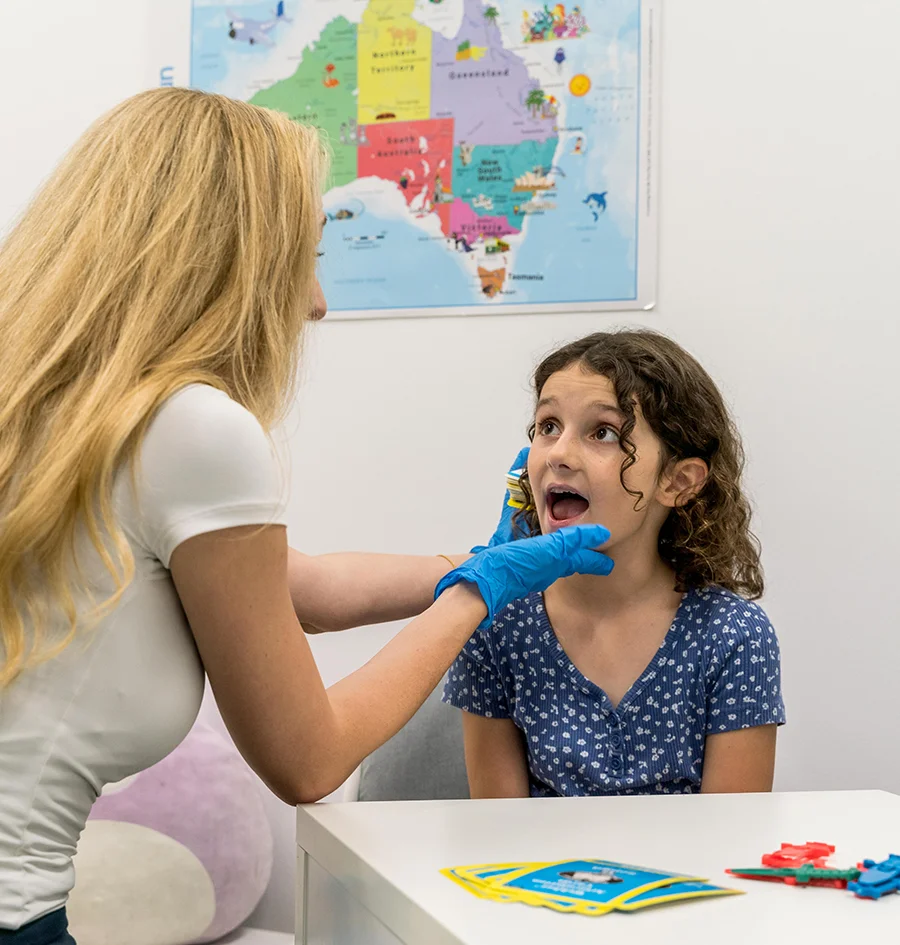
At LEAP Centre, our speech therapists work collaboratively with families and educators to reduce the child’s anxiety and build confidence step by step.
Therapy focuses on:
- Reducing pressure: creating relaxed situations where the child feels safe to communicate non-verbally first.
- Gradual exposure: using the “Sliding-In” approach to move from non-verbal to whispering to talking.
- Parent and teacher coaching: helping adults respond supportively and avoid accidental pressure.
- Building communication confidence: celebrating progress in any form — gestures, facial expression, whispering, or speech.
We tailor sessions to the child’s comfort level, often beginning with play-based therapy in a private setting before expanding to other environments.
What Parents Can Do at Home
- Don’t force or bribe your child to speak — it increases anxiety.
- Acknowledge effort, not speech (“I love how you joined the game today!”).
- Keep expectations consistent between home and school.
- Model calm conversation and reduce background stress around talking.
- Work closely with teachers so they understand the plan.
Remember — progress can be slow, but with consistent support, most children do learn to speak comfortably across settings.
When to Seek Professional Help
If your child has been silent in certain settings for more than a month (despite talking freely elsewhere), it’s worth seeking professional input.
Early intervention reduces long-term anxiety and helps your child develop positive experiences around communication.
Our therapists at LEAP Centre in Frenchs Forest specialise in working with young children with communication-related anxiety. We offer individual therapy and parent coaching to help families across the Northern Beaches, including Dee Why, Allambie Heights, Forestville, and Belrose.
Supporting Your Child’s Voice
Selective mutism can be challenging, but with gentle, consistent support, children can overcome the fear of speaking and build lasting confidence.
If you’re concerned about your child’s communication, we’d love to help.